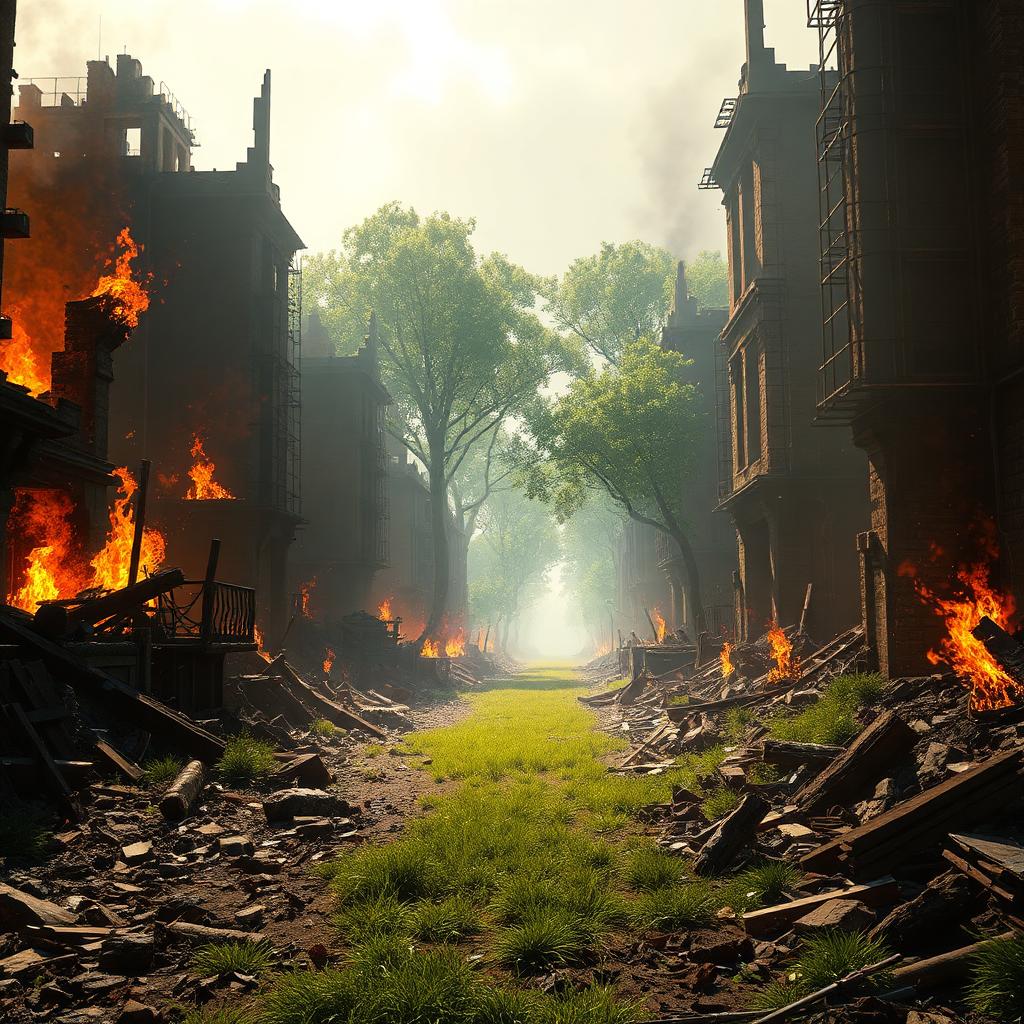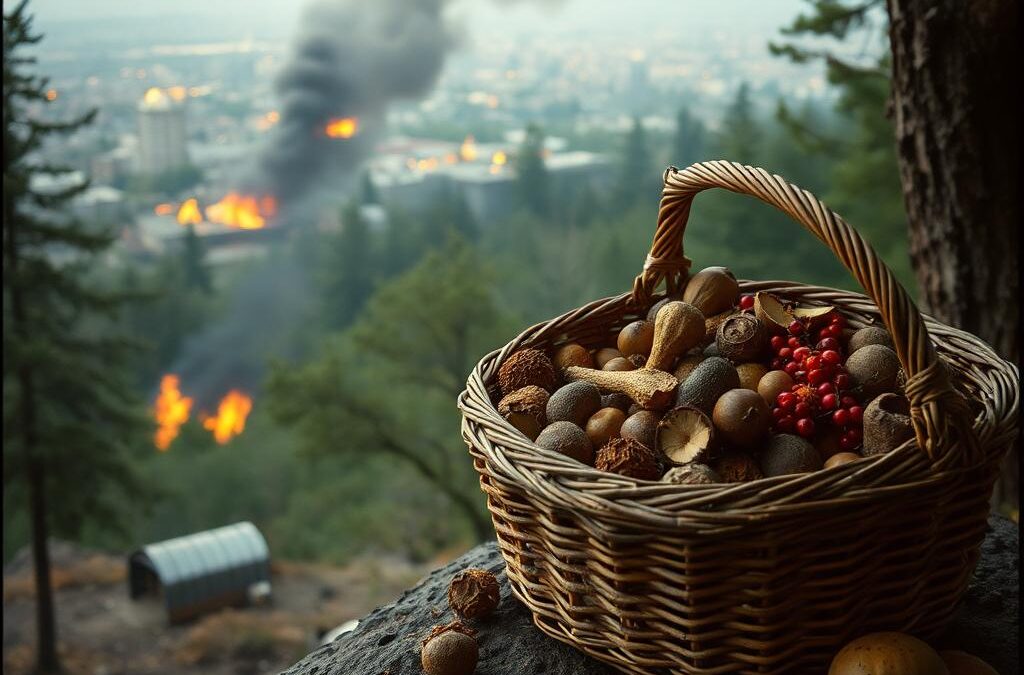
You might be wondering: Why is a science fiction author talking about foraging? Well, while I love dreaming about spaceships, time travel, and alien blasters just as much as the next guy, I believe that we as humans are in a pivotal moment in history. We need to consider the trajectory of our existence- and to be honest, I’m not so sure that towards “more tech” is the answer to all our problems, as is the common thought. I don’t want to get ahead of myself, though, so let me preface this conversation with a bit of context:
I love foraging. After seven years of avidly learning, practicing, and teaching it, it remains one of my dearest-held passions and pastimes. There are few things that I would rather be doing on any given day than wandering around the woods with my family, enjoying creation, and looking for wild edibles. It is literally a taste of heaven on earth, and it is for this and the following reasons that I would like to discuss why you should learn how to forage.
The Common Reasons
Foraging provides food stability
In the infamous year of 2020, the world watched as the facade of an “unbreakable supply chain” crumbled to the ground. In the wake of economic upset, common products like toilet paper, flour, milk, eggs, and more quickly became scarce. While things have stabilized once again, the question still remains in the back of society’s mind- can it happen again? While a fear-driven mindset is not advisable, it is nonetheless wise to consider how one can provide for themself and their family outside the common supply chain. Foraging, if learned and practiced now, can provide significant food stability if the need ever arises.

Foraging is money-saving
Foraging is essentially free! While there are certain investments you may want to make in learning and gathering materials, it is generally a low-cost, high-gains practice. There is a trade-off, however: time. While gathering some trailside nibbles takes little commitment, foraging for a significant amount of your calories can be much more time-consuming. None of that time is wasted, but you must keep this in mind when considering a foraging lifestyle.
Foraging is fun
What child doesn’t love a good treasure hunt? And, if we’re being honest, what adult doesn’t either? I think it is likely that this desire to “search and find” stems from the ancient proclivity to forage for food. There is something special about gathering “treasures” from the woods- whether a basketful of acorns picked from around the base of an oak, or the chicken-of-the-woods mushroom that you stumbled upon while hiking- that gives one a sense of thrill, thankfulness, and wonder.

These three reasons are the most obvious and commonly discussed. There are, however, several additional reasons that, after years of foraging myself, I find highly significant:
The Deeper Reasons
Demystifying the “Wall of Green”
Whether you realize it or not, we all, to some extent, see nature as a “wall of green”. Sure, it’s beautiful, and you know in your head that it is made up of many different species of plants, but there’s so much going on therein that we often miss out on the infinite nuance of it all by not understanding the individual parts that make the whole. Often, people in the West go their whole life without learning more than a handful of species in their environment, but learning the individual members of the “wall of green” can help you appreciate your environment on a much deeper level.
This concept is similar to how we process a new social setting- a job, a class, a church, etc. At first, everything can seem strange and new, and possibly daunting. You feel little connection to the many people who occupy the same place as yourself, but over time, you get to know them on an individual basis. You find yourself slowly becoming more deeply connected with your social environment, and some of the people whom you previously saw as simply part of a crowd may end up becoming close friends.
Because the first step of foraging is species identification, it helps to see the “wall of green” in more of the detail it deserves. As you learn what a certain species is, you simultaneously learn what it isn’t- soon, one identification can turn into a dozen, and as you learn more and more new “friends”, it’s easier to pick out who you do and don’t know- and if you’re an “environmental extravert”, like me, then you eventually want to learn who everybody is in the “room”.
Not only does foraging incentivize us to identify the individual members of our environment, but it also encourages a deeper relationship as we learn how and how not to interact with them. What are a given species’ uses? What does it grow near? What does it look like in your current season? Does it need minimal processing to render it edible or useful? How can it be sustainably harvested? Just like a social setting, every species has a personality- and the more we learn them on an individual basis, the more we demystify the “Wall of Green”.
It connects you with nature in a deeper way
When you eat food directly from your environment, you connect with it on a deeper level. In a purely physical sense, this is literally what is happening: you are moving your environment from the outside of you to the inside of you, and your body then becomes made up by it. On a metaphysical level, there is something deeply satisfying about knowing exactly where your food comes from- and harvesting and preparing it yourself is something that few people in western culture experience in a meaningful way. Gardening, farming, and hunting are ways we can provide our own food, but there is something both magical and therapeutic about foraging that, for me, sets it apart from all these other great practices.
These are not just my thoughts: Daniel Vitalis, an advocate of modern humans returning to many of our forsaken lifeways, often speaks about this concept in his works. Check out his content if any of this interests you.
It gets you outside
Since almost everyone already knows that they are better off the more time they spend outside, I will not take much time to advocate for it- the point I want to stress is that foraging gets you outside. No matter the time of year, it provides a reason to be out and about, interacting with creation in a meaningful, enjoyable, and practical way: thus feeding the soul and body before food even makes it to your mouth. In the West, we have given ourselves too many reasons to stay indoors- and to reverse this, we need to give ourselves reasons to head back outside and into the real world.
If you need to be convinced that being outside is good for your general well-being, check out this study, this article, or just do a quick Google search (I wouldn’t suggest always trusting the “top” search engine results- but on this front, it’s pretty solid).
It helps cultivate thankfulness
While there is something to be said for the cultivation of one’s own food (gardens, farms, and food forests, etc), again, there is something different about foraging. It helps you understand both reliance and dependence on the purely natural state of creation: sometimes you get abundance, sometimes you don’t. Sometimes you get to the Mayapples before the Raccoons do, sometimes you don’t. If you come upon a bloom of Lion’s Mane mushrooms in the middle of the forest, there is nothing to do but praise God for ordering the conditions that crossed your path with it.
We like to think that we have ultimate command of our destiny- that we are in control of our lives, and that humanity sets the course of history. While there is truth in this assumption (to some extent), in the grand scheme, there are forces at play that are infinitely beyond us. These forces created the universe and hold it all together, and they can both give and take away.
While humans are the physical dominators of the Earth, we are still just creatures with extreme limitations- and without inputs like water, oxygen, and food, our bodies will wither away and cease to exist. Foraging helps us keep this in perspective by realizing that everything that we gather with our hands is a blessing from above.
A humble future
To wrap things up, I must revisit my original question – Why is a Sci-fi author talking about foraging? The answer has to do with the tendency of sci-fi enthusiasts to look toward and imagine the future. This often manifests in stories with more technology, more assertion of human will on the environment, and ultimately more separation from creation and the natural order. While this propensity for technological improvement is in many ways a good thing, it needn’t be such a primary drive of humanity. In fact, to achieve something closer to “utopia”, my opinion is that we need to return to certain mindsets that are more in line with the natural laws of the universe.
My novel, “The Veil”, explores this very concept and looks at what civilization could look like if we gave up over-reliance on technology. It implies the question: could we actually be happier if we lived more simply? How could society look if we re-ordered our priorities into a lifestyle that works more with nature instead of despite it?
Modern foraging is a reinitiation to the “old ways”- a gateway to understanding the world in a deeper and more meaningful way. From every huckleberry picked, every nettle cut, and every nut gathered from the forest floor, we are not just procuring food: we are engaging in an age-old practice that makes us human.
Final Thoughts
There is so much more to touch on concerning all of this- not only are there even more reasons to forage, but you may be wondering: How do I get started? How can I work foraging into a busy schedule? How do I learn what is in season in my area? These are great questions for me to address in future posts, but for now, feel free to reach out to me via the contact form on my website if you would like to get in touch.
Now go out into that big, beautiful wall of green, and “shake hands” with the first species that catches your eye. Learn what it has to offer to you, and what you have to offer to it: even if it is just your appreciation. This is the start of a relationship with creation that we must have to fully understand our role as stewards of the Earth.
Noremas Deīvaren,
Daniel P. Glick